
Voice AI Takes Center Stage: ElevenLabs' Latest Funding, Features, and the Future of Text-to-Speech
Imagine a world where your favorite audiobook narrator reads in your own voice, or global podcasts instantly dub into any language without losing emotional nuance. That's not science fiction—it's the reality unfolding in text-to-speech (TTS) technology today. With advancements in voice synthesis and cloning accelerating, companies like ElevenLabs are leading the charge, making speech AI more accessible and lifelike than ever. As we hit December 2025, the TTS landscape is buzzing with news that could transform content creation, accessibility, and even everyday communication. Why should you care? Because these developments aren't just tech upgrades; they're unlocking new ways for creators, businesses, and individuals to connect through voice.
ElevenLabs Secures $19M Funding Boost Amid Global Expansion
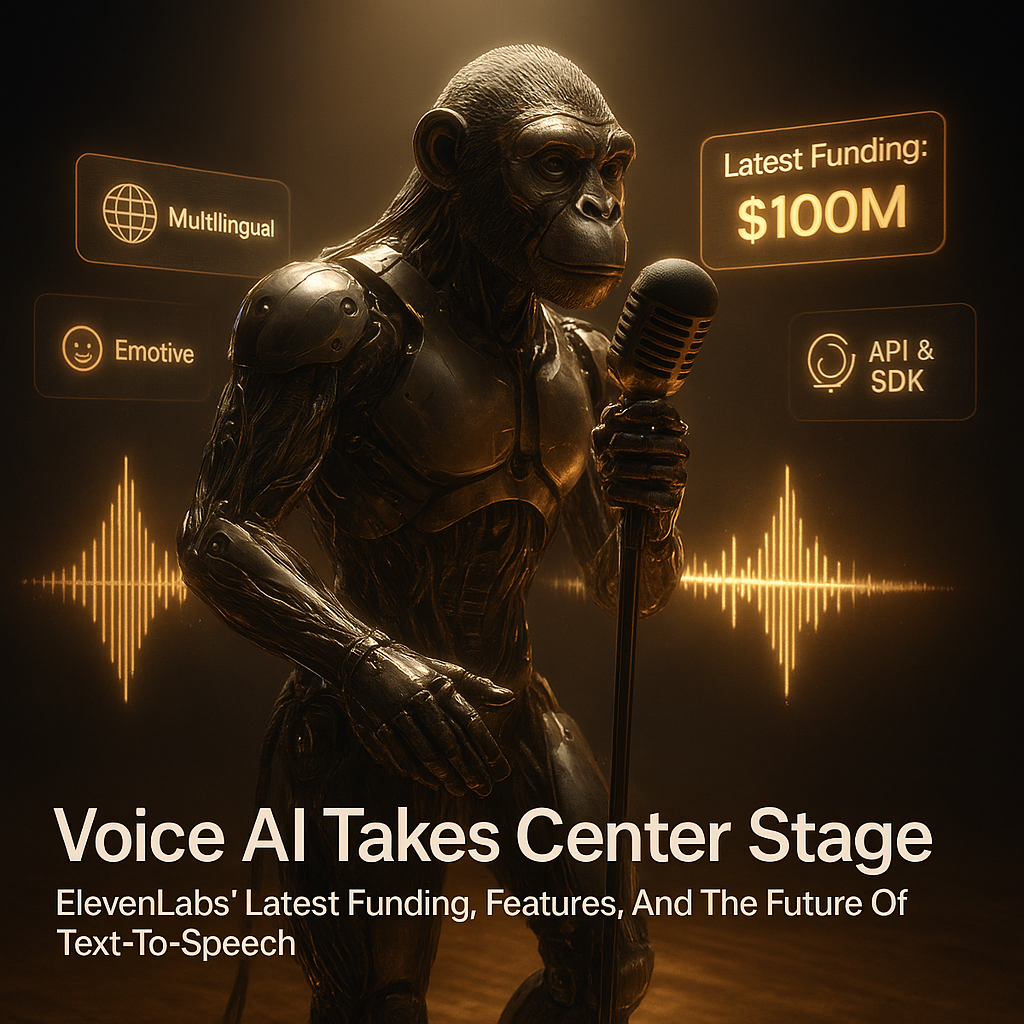
ElevenLabs, a frontrunner in AI voice generation, just announced a $19 million Series A funding round on November 20, 2025, led by investors including Nat Friedman, Daniel Gross, and Andreessen Horowitz. This infusion of capital comes at a pivotal time, as the company pushes boundaries in TTS and voice cloning, aiming to scale its platform for broader adoption in media, gaming, and enterprise applications. According to ElevenLabs' official blog, the funding will fuel ongoing research into generative voice AI, emphasizing ethical development and high-fidelity outputs that rival human speech.
Hot on the heels of this announcement, ElevenLabs made waves in Asia by launching its services in South Korea on November 23, 2025, positioning the country as a launchpad for voice AI in the region. As reported by Korea Tech Desk, this move taps into Korea's thriving tech ecosystem, where demand for localized voice synthesis is skyrocketing. ElevenLabs' tools now support seamless Korean language integration, enabling creators to generate natural-sounding speech AI for K-content like dramas and music. This expansion isn't just about geography—it's a strategic play to embed TTS into global workflows, from dubbing international films to powering virtual assistants in multiple dialects.
What makes this funding and launch so significant? ElevenLabs isn't starting from scratch; they've already built a reputation for ultra-realistic voice generation. With over 5,000 voices across 70+ languages, their platform democratizes speech AI, allowing even small creators to produce professional-grade audio without expensive recording sessions. As voice cloning becomes more precise, expect to see more personalized applications, like custom audiobooks or branded voiceovers, emerging in the coming months.
Breakthrough Features: Speech-to-Speech and Enhanced Voice Cloning
Diving deeper into innovations, ElevenLabs unveiled its speech-to-speech (STS) technology back in October 2025, but recent updates have made it a game-changer for real-time voice conversion. STS allows users to transform one voice recording into another while preserving emotions, accents, and pacing—think dubbing a video where the actor's delivery stays intact but switches languages effortlessly. According to the company's blog post from October 16, 2025, this tool controls nuances like whispering or excitement, setting a new bar for voice synthesis in multimedia production.
Fast-forward to late November, and ElevenLabs rolled out exciting new features for 2025, including improved real-time voice cloning that captures a speaker's essence in minutes. As detailed in a Best AI Speech analysis, these enhancements reduce cloning time from hours to seconds, using just a short audio sample to generate hyper-realistic replicas. This is huge for podcasters and marketers who want to scale content without constant re-recording. For instance, imagine cloning a CEO's voice for multilingual earnings calls, ensuring consistency across borders.
Beyond ElevenLabs, the TTS ecosystem is evolving. A comprehensive review of the best text-to-speech AI platforms from November 27, 2025, by AI/ML API highlights ElevenLabs as the top pick for realism, praising its Multilingual v2 model for emotional depth. Competitors like Murf.ai shine in creator-friendly tools, but ElevenLabs edges out with superior voice cloning accuracy. These features aren't gimmicks; they're backed by deep learning models that analyze prosody—the rhythm and intonation of speech—making generated audio indistinguishable from human recordings in blind tests.
The Broader TTS Landscape: Competitors and Ethical Considerations
While ElevenLabs dominates headlines, the TTS space is heating up with contributions from tech giants. OpenAI's gpt-4o-mini-tts update in March 2025 introduced more "steerable" voices, allowing fine-tuned control over tone and speed, as covered by TechCrunch. This steerability means developers can craft speech AI that adapts to context, like shifting from formal narration to casual chit-chat. Similarly, Google's May 2025 upgrade to its Speech Services added native audio output via Gemini models, supporting over 24 languages with on-the-fly switches and subtle effects like whispering, according to TechCrunch reports.
Podcasting platform Podcastle joined the fray in March 2025 with Asyncflow v1.0, offering 450+ AI voices for text-to-speech, emphasizing low-data training thanks to large language model advancements. As Yeritsyan, Podcastle's co-founder, told TechCrunch, this breakthrough slashed development costs, making high-quality TTS viable for indie creators. These developments underscore a trend: TTS is moving from robotic outputs to expressive, context-aware voice generation, powered by multimodal AI.
But with great power comes responsibility. Voice cloning raises ethical red flags, from deepfakes to unauthorized replicas. ElevenLabs addresses this head-on in their funding announcement, committing to watermarking and consent protocols. A Medium article from November 12, 2025, evaluating voice AI pillars like AssemblyAI and ElevenLabs, stresses the need for enterprise-grade safeguards. As speech AI proliferates, balancing innovation with misuse prevention will be key—especially as tools like STS enable seamless voice swaps that could blur reality in videos or calls.
Looking Ahead: How TTS Will Reshape Our World
As 2025 draws to a close, text-to-speech technology stands at an inflection point. ElevenLabs' funding and features signal a future where voice synthesis isn't just about conversion—it's about creation. From enhancing accessibility for the visually impaired with natural narration to revolutionizing global communication through instant dubbing, TTS holds transformative potential. Specific examples abound: Korean creators using ElevenLabs for authentic K-pop lyrics readings, or businesses deploying cloned voices for personalized customer service.
Yet, the real excitement lies in integration. Imagine AR glasses narrating surroundings in your voice, or AI companions that evolve with your speech patterns. According to the AI/ML API review, platforms like ElevenLabs are poised to lead this charge, with API access enabling developers to embed speech AI everywhere—from apps to smart homes.
In conclusion, the latest TTS news isn't just tech trivia; it's a glimpse into a more connected, expressive world. As voice cloning and synthesis mature, we'll need thoughtful policies to harness their benefits while mitigating risks. What voice will you create next? The microphone is yours—powered by AI.
(Word count: 1,218)